1. The anatomy of a lock
Nearly every residential and commercial lock you'll meet on a call is a pin tumbler lock. Deadbolts, knob locks, most padlocks, most commercial mortise cylinders — same core idea, different housing. Learn this one mechanism and you understand 90% of the locks in the field.
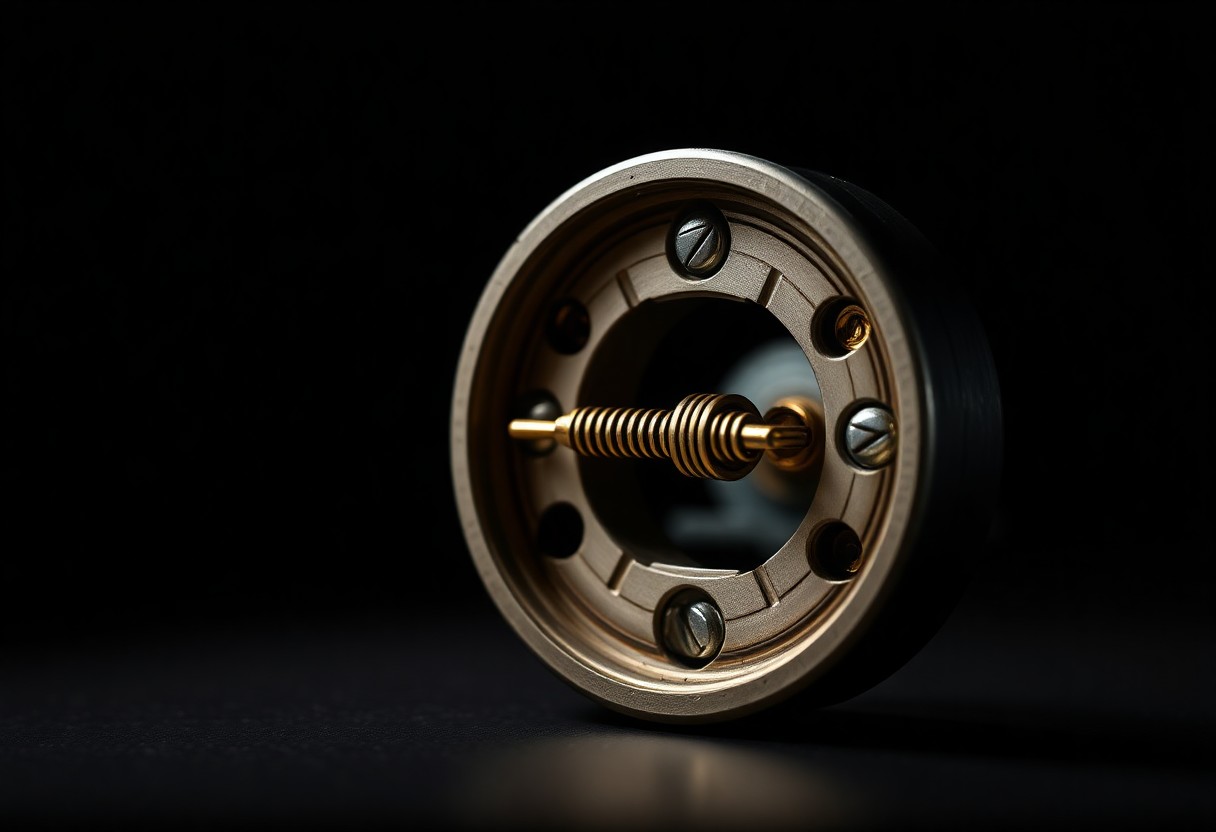
A pin tumbler cylinder has two parts: the plug (the part that rotates when the correct key turns) and the housing (the fixed shell around it). Drilled across both are a row of small chambers — usually five or six. Each chamber holds a stack of pins and a spring pushing them down.
2. How a pin tumbler works
Each chamber holds (at minimum) two pins: a key pin at the bottom (the one the key touches) and a driver pin above it, with a spring pressing the stack down into the plug.
With no key in, the driver pins straddle the gap between plug and housing — they cross the shear line, the seam where the plug meets the housing. As long as a pin crosses that line, the plug is pinned to the housing and can't rotate. That's a locked lock.
The right key has a series of cuts at different depths. Slide it in and each cut lifts its pin stack to a precise height, so that every key pin sits just below the shear line and every driver pin sits just above it. Now nothing crosses the seam, the plug is free, and the key turns it. That alignment — every stack broken exactly at the shear line — is the whole game. Cutting a key, picking a lock, rekeying a cylinder: all three are just different ways of getting those pins to the shear line.
3. How picking actually works
Manufacturing isn't perfect. The chambers in a plug are never drilled in a flawless straight line — each is off by a hair. That tiny imperfection is what makes picking possible.
You apply light rotational pressure to the plug with a tension wrench in the bottom of the keyway. Because the pins are slightly misaligned, one pin binds against the plug first. You push that pin up with a pick until its driver clears the shear line — and the plug rotates a microscopic amount and catches the pin on the edge of the shear line (you'll feel a tiny click). Now the next-tightest pin binds. You repeat. One by one, each driver gets set above the shear line, and when the last one sets, the plug turns. This is single-pin picking.
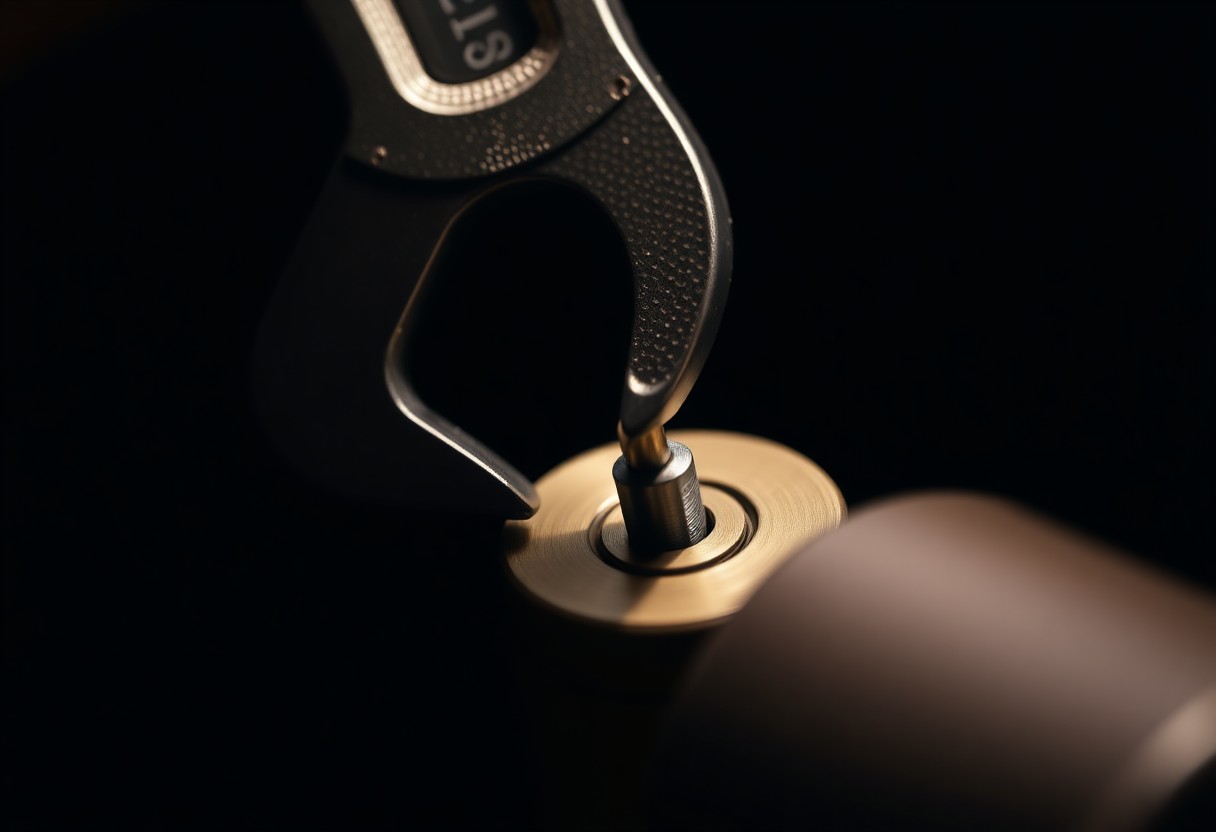
Raking is the faster, sloppier cousin: you scrub a serrated rake across all the pins while holding tension, hoping to bounce several drivers above the shear line at once. It's quick on cheap locks and useless on good ones.
Worth saying plainly: picking is a real, legitimate professional skill — and on a real job it's often the last resort, not the first. Most lockouts are solved faster by other non-destructive methods or by rekeying. We teach picking because a complete locksmith understands the lock; we teach it for lawful, authorized work on locks you own or are hired to open.
4. Rekeying — the bread-and-butter skill
This is the one that pays your first invoices. Rekeying means changing a lock so an old key no longer works and a new key does — without replacing the hardware. A landlord turning over a unit, a homeowner who just bought a house, an office that fired someone: they all need rekeys, constantly.
The mechanism follows straight from Chapter 2. You remove the plug, take out the old key pins, and drop in a new set of key pins whose heights match a new key's cuts. Now only the new key lifts every stack to the shear line. Five minutes of work per cylinder once you've done a few, and you can charge per cylinder.
5. The starter toolkit
You do not need a $3,000 van of equipment to take your first paid calls. A focused starter kit covers rekeys, basic lockouts and key duplication:
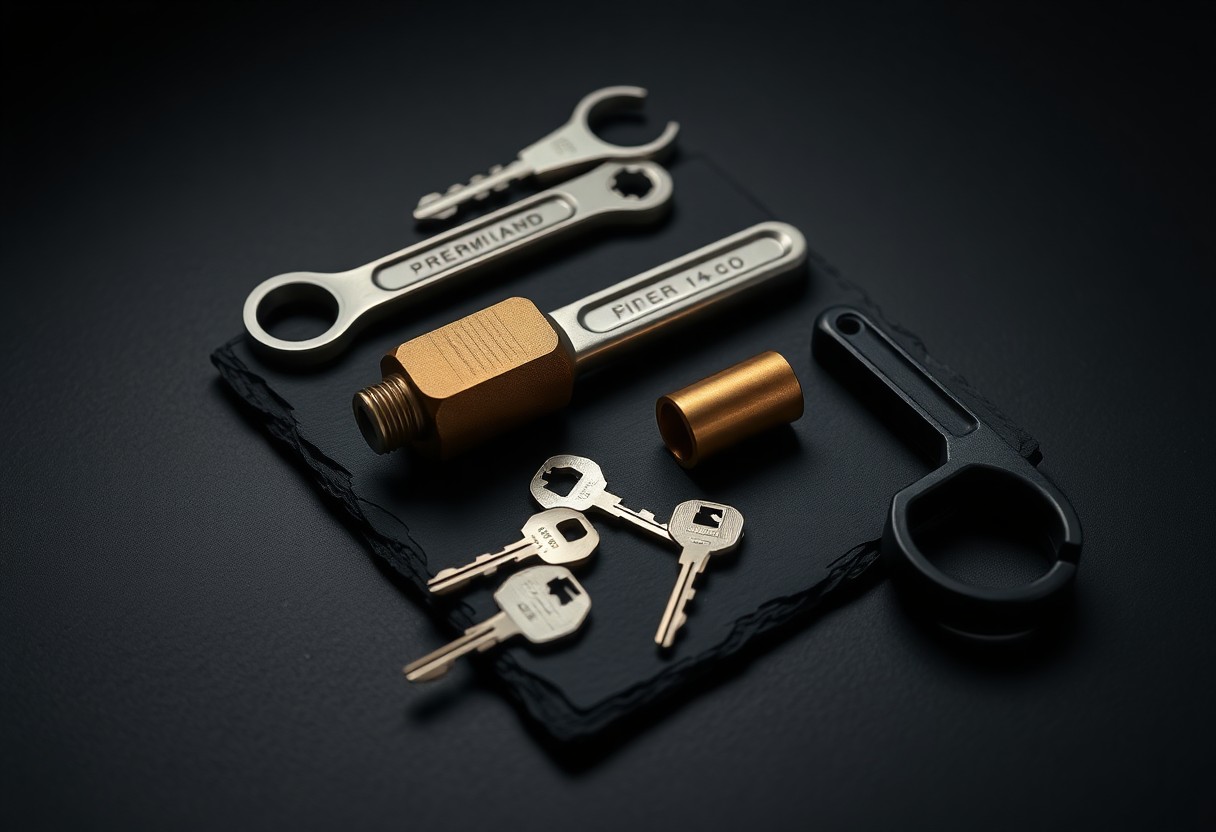
- Rekeying kit — assorted key pins, a plug follower, tweezers, a pinning mat
- Pick set — a few hooks, a rake, two or three tension wrenches
- Key machine — a duplicator (the one real investment; pays for itself fast on key cutting)
- Lockout tools — wedges, an air wedge, a long-reach tool for automotive
- The boring essentials — a headlamp, a multi-tool, and a clean way to take payment on site
6. The legal line you don't cross
This is the part the YouTube "lockpicking" crowd skips, and it's the part that keeps you in business. The skill is neutral; the authorization is everything.
You work on locks that are yours, or that you've been hired and authorized to work on by someone who can prove they have the right to (the homeowner, the property manager, the vehicle's titled owner). You verify ID and authority before you open anything. You never open a lock for someone who can't establish they belong there — that's not a gray area, it's the line between a locksmith and a problem.
Licensing is separate and state-specific: in roughly 37 of 50 states you can take rekey and deadbolt-install work on day one with no state license, while some states and cities require licensing before certain jobs. Knowing exactly which calls you can take today — and which need a license first — is one of the first things Lock School maps out for your state.
This handbook teaches how locks work and how the trade operates. It is not legal advice, and local licensing compliance is your responsibility — we help you check it, never bypass it.
7. The five services that pay
Here's where the mechanism turns into a living. The US locksmith market is roughly $3.5B/year (IBISWorld 2024), and the people working in it are aging out faster than new ones arrive — fewer than ~28,000 active locksmiths, median age in the 50s. That's not a crowded field. That's an opening.

- Lockouts — the biggest share of most locksmiths' revenue; $75–$150 a call, 24/7 demand that spikes on holidays
- Residential rekeys — $80–$200 a job, constant turnover-driven demand
- Automotive — key cutting and transponder/fob programming; $120–$450 a job, higher skill, higher margin
- Commercial — master-key systems, accounts, contracts; $500–$5,000 jobs and recurring relationships
- Key duplication & smart locks — small tickets and a growing smart-lock install niche
The skills get you in the door. The business — pricing so you stop losing jobs to scam operators, getting found, answering the phone, turning one call into a repeat customer — is what separates a $30K hobbyist from a $100K operator. That's the half nobody teaches, and it's the half Lock School is built around.
Figures from U.S. Bureau of Labor Statistics, IBISWorld Industry Report 56162, and the U.S. DOL Occupational Outlook Handbook (2024). Real ranges; your results depend on your market and effort.
8. Wafer Locks — Not Every Lock Is a Pin Tumbler
Everything in Chapters 1–4 assumed round pins stacked in round chambers. A huge slice of the locks you'll actually touch — older GM ignitions and door locks, most desk and file-cabinet locks, mailbox locks, sliding-glass-door locks, a lot of padlocks — use a cheaper, flatter mechanism instead: the wafer lock.
A wafer isn't a stack of two round pins. It's a single flat, kidney-shaped piece of metal sitting in a slot milled straight through the plug, pushed down (or sideways, in side-bar housings) by a spring. Cut into the middle of the wafer is a notch. When the correct key seats, its bitting depth pushes each wafer up until the notch lines up exactly with the shear line, and the wafer clears — same shear-line logic as Chapter 2, just a different-shaped part doing the clearing.

Fewer parts means cheaper to manufacture and cheaper to install at scale — which is exactly why wafer locks show up on mass-produced fixtures instead of front-door deadbolts. It also means less pick resistance: wafer locks generally rake open faster than a comparable pin tumbler because there's less to individually distinguish by feel, and looser tolerances mean less to bind on.
9. Automotive Locksmithing — Transponders and Immobilizers
Before the mid-1990s, a car key was just a cut piece of metal — mechanical locks in the doors and ignition, nothing electronic involved. Cut a blank to match and the key worked. Almost every vehicle built since carries an immobilizer, and cutting the metal is now only half the job.
Inside the plastic head of a modern key sits a transponder — a small passive RFID chip with no battery of its own. It doesn't need one: a coil-shaped antenna wrapped around the ignition cylinder (or, on push-button cars, built into the dash) energizes the chip by induction the instant the key gets close, and the chip answers back with its stored ID code.

That ID gets read by the vehicle's immobilizer module — sometimes part of the Body Control Module, sometimes the Engine Control Module itself — and checked against a short list of authorized chip IDs stored in the car. Match, and the module tells the fuel injection and ignition systems it's fine to fire. No match, and most vehicles will crank the starter (that circuit is mechanically separate) but never actually run, because spark or fuel delivery stays locked out.
That's the concept every manufacturer implements differently. Cutting a working blade and programming a valid transponder ID are two separate operations, and a modern automotive call is rarely just one or the other — most jobs need both. On older systems a handheld OBD-II programmer can add a key in minutes from the driver's seat; on newer proximity/push-to-start systems, the same job can require dealer-level security access, a bench tool pulled straight to the module, or a PIN code sourced through a locksmith security database.
10. Impressioning and High-Security Cores (SFIC)
Two more skills separate a working locksmith from a hobbyist with a pick set: making a key for a lock you can't — or shouldn't — pick, and servicing the interchangeable-core hardware that runs most commercial master-key systems.
Impressioning
Impressioning is how you cut a working key directly from the lock itself, without disassembling anything and without picking. You start with a blank filed roughly to the keyway's shape, insert it, and apply firm rotational pressure — similar in spirit to tension in picking, but harder — while working the key in and out and side to side. Every pin that's binding leaves a tiny witness mark on the blank: a scuff or dent exactly where that pin is pressing hardest. You pull the key, find the marks under good light or magnification, and file a small amount off the blank at each mark. Reinsert, repeat. Each pass, the marks move and shrink as the cuts get closer to true depth; when a pin stops marking, that cut is finished. Do this for every chamber and eventually the key turns the lock on its own.

Impressioning is slow to learn — real proficiency is a season of practice, not an afternoon — but it's the difference between telling a commercial customer "I have to drill your cylinder" and quietly cutting them a working key on site.
Small-Format Interchangeable Core (SFIC)
Walk into most office buildings, schools, and apartment complexes and the cylinders you'll find aren't standard pin tumblers bolted permanently into the hardware — they're SFIC, a removable core about the size of a large cork that drops into a standard housing (Best, Corbin Russwin, Falcon, and several compatible knockoffs all use close variants of the same footprint).

An SFIC core has two shear lines instead of one. The operating shear line works exactly like Chapter 2 — the tenant or employee's day-to-day key clears it and turns the core to open the door. The control shear line sits higher, guarded by an extra control lug. A special control key clears the control lug specifically, and doing that releases the entire core so it can be pulled straight out of the housing — no screwdriver, no disassembly, no drilling.
Master-key design, SFIC servicing, and impressioning on customer property routinely fall under commercial contracts, and several states set a higher bar — additional licensing, bonding, or insurance — for master-key and high-security work specifically. None of this is legal advice; check your state's requirements before you take on commercial master-key jobs, the same way Chapter 6 said to check them before your first residential call.
Want the rest — the actual playbook?
This handbook is the map. Lock School is the turn-by-turn: the full curriculum, a real 1-page locksmith website in your city, a tracked phone number, and the founding-member network you stay in for life. Founding 25 lock in $497 lifetime.
Get the free masterclass + your free site